Collaboration and communication are keys to care during World Cup
July 15, 2026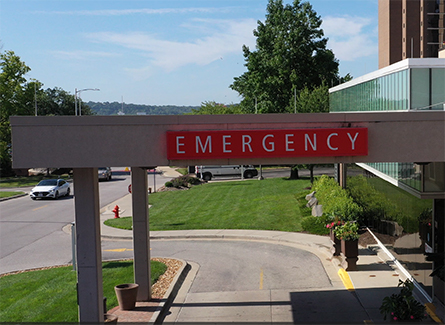
When Kansas City’s population swelled during the World Cup, NKC Health Trauma & Critical Care was ready.
Internally, department leaders expanded staffing plans, extended fast-track coverage hours and adjusted leadership schedules to provide additional support during anticipated peak periods surrounding match days.
“Heading into this, the biggest challenge was the unknown. We didn’t know what was going to happen,” said Shannon Miles, BSN, RN, CEN, NKC Health Emergency Department director. “That said, patient care didn’t change if volumes increased. Our focus remained on effective triage and making sure patients with the greatest needs received timely care, whether they were visitors or members of our community.”
Externally, the planning process involved coordination among hospitals, EMS agencies, emergency management teams and community partners throughout the region.
The preparation strengthened relationships among healthcare organizations and emergency response agencies across the metropolitan area, creating connections that will continue to benefit patients long after the tournament.
"Communication is our most important tool," Shannon said. "The more information we can share in real time, the better prepared we are to respond to changing conditions."
New technology enhances communication
A key new piece of technology introduced in the lead-up to the World Cup is Pulsara, a communication platform that allows EMS crews and hospitals to share information in real time. The system gives providers greater visibility to incoming patients and helps improve coordination between emergency medical service crews and hospital teams.
Although World Cup preparations showcased its value, the project was already underway. Leaders expect it to play a lasting role in emergency communication and coordination.
Building on existing emergency preparedness plans
While the World Cup created new opportunities for operational planning, much of the preparation relied on processes already in place.
The health system's surge capacity plans, mass casualty incident protocols and emergency response procedures were designed to handle sudden increases in patient volume regardless of the cause. Although the clinical teams conducted additional mass casualty drills and reviewed response plans, the core approach remained unchanged.
"Whether it's a major sporting event, a weather emergency or another large-scale incident, the principles are the same," said Marirose Apolinarski, MSN, MBA, RN, NKC Health senior director of critical care services. "We rely on established processes that help us quickly prioritize patients and deliver the right level of care."
Lessons beyond the World Cup
While the event itself was temporary, many of the benefits from testing the preparedness, communication and collaboration will continue. Stronger regional partnerships, enhanced communication tools and renewed familiarity with emergency response procedures have positioned hospitals to respond effectively to future challenges.
"Mass casualty incidents are among the most challenging situations we face, but they're also what we train for," said surgeon Kyle Harken, DO, NKC Health Trauma & Critical Care. "We never know exactly what we're going to encounter, so preparation, teamwork and communication become critical the moment the call comes in."
Most importantly, the experience reinforced the value of preparation.
“I couldn't be more proud of our team,” Shannon said. “Nurses, technicians, mental health technicians and others have embraced the challenge and asked how they could help and prepare.”
Marirose said that level of preparedness depends on close coordination across the organization. She credited Emergency Management Program Manager Carl Zornes for leading disaster planning efforts and working with nursing staff and physicians to ensure every department is ready to respond during a mass casualty or disaster incident.
“Carl is a key player in coordinating our preparedness across the hospital," she said. "That preparation depends on strong partnerships with our surgeons, trauma surgeons and emergency physicians, whose expertise helps ensure we're ready to care for patients during any emergency.”