WATCHMAN procedure for atrial fibrillation

All you need is love ... and a good cardiologist
When AFib and blood thinners threatened the life they loved, Mary Ann and Hance Pierson turned to NKC Health for answers. Discover how the WATCHMAN™️ procedure helped this couple find freedom, confidence and more time together.
Watch Hance and Mary Ann's storyWhen you have atrial fibrillation (AFib), the WATCHMAN procedure gives you options beyond taking blood thinner medication. As one of the first hospitals in the region to use the WATCHMAN implant, NKC Health continues to help reduce stroke risk in people with AFib.
Learn more about WATCHMAN
Contact your cardiologist to learn more. If you don’t have a cardiologist, call NKC Health Heart Care at (816) 221-6750 or find a cardiologist online.
What is the WATCHMAN implant
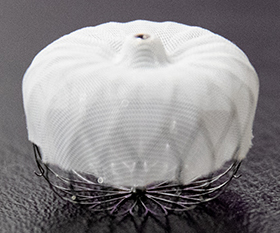
The WATCHMAN left atrial appendage closure implant is a device the size of a quarter. It’s attached to the heart during a minimally invasive procedure that reduces the risk of stroke in people with AFib not caused by heart valve problems.
During the procedure, you receive general anesthesia. A WATCHMAN-trained cardiologist guides a narrow tube, with the implant attached, through a small incision in the upper leg into the heart. They place the implant into the opening of the left atrial appendage (LAA), creating a seal.
Overall, the procedure lasts about one hour.
Who qualifies for a WATCHMAN implant
To qualify for a WATCHMAN implant, you must:
- Have atrial fibrillation not caused by heart valve problems
- Be at an increased risk for stroke, according to test results
- Be able to take blood thinners for AFib
- Need an alternative to blood thinners
Atrial fibrillation (AFib)
An atrial fibrillation diagnosis means a person has an irregular heartbeat that can lead to blood clots, stroke, heart failure and other heart-related complications. In people with AFib, more than 90% of clots that form in the heart develop in the left atrial appendage. If a clot leaves the left atrial appendage, it can enter the circulatory system, travel to the brain and cause a stroke.
The WATCHMAN implant seals the left atrial appendage, preventing blood clots from escaping and reducing the risk of stroke.
WATCHMAN procedure benefits and risks
“It’s reassuring to know I can eliminate my risk of internal bleeding, stop taking blood thinners and return to a more normal way of life.” --Travis, WATCHMAN patient
The main benefit of having the WATCHMAN implant is it offers an alternative to taking blood thinners. Additionally, recovery from the procedure is faster and easier than open heart surgery.
Patients typically leave the hospital the day after the WATCHMAN procedure and return to regular activity within one week. Most people discontinue their anticoagulant (blood thinner) about 45 days after receiving the implant. They take clopidogrel (Plavix) until 6 months post procedure and remain on daily aspirin for life.
All heart procedures have potential risks, which your doctor will discuss in detail. Those who receive the WATCHMAN implant can avoid many risks associated with open heart surgery. The most serious risks include bleeding complications, infection, left atrial appendage rupture and death from any cause.
Your expert heart team
If you qualify for WATCHMAN, you’ll work with a dedicated team of interventional cardiologists, electrophysiologists, anesthesiologists and clinical staff members. Your team evaluates you before and after the procedure and stays with you every step of the way.
Interested in WATCHMAN? Ask your cardiologist for more information.