The germ capital of your home — And what to do about it
June 29, 2026By: Joel Francis
Categories: Your Wellness
Quick quiz: What’s the germiest room in the house? The bathroom seems like an obvious choice, but according to the National Sanitation Foundation (NSF), the kitchen actually owns those dubious honors.
According to the NSF’s germ study, the kitchen is home to six of the Top 10 germ hot spots.
Germ hot spots
Your dish rag or kitchen sponge is the top place germs love to hide – and with good reason. This item is used most often to scrub the germs off dishes and countertops. If you’re using a sponge, wet it and put it in the microwave for a couple of minutes once a day, and replace it every couple of weeks. If you’re using a dishcloth, run it through the washing machine on the sanitizing cycle with bleach and replace it every couple of days.
The sink handles a lot every day, so it’s not surprising that microorganisms love to collect and grow there. Clean your sink basin with a disinfecting cleaner once or twice a week. Once a month, pour a mix of one tablespoon of household bleach and one quart of water down the drain to clean and disinfect it. Run sink strainers through the dishwasher once a week.
Mold, bacteria and mildew love dark, damp places, which make the coffee reservoir an often-overlooked breeding ground. An easy way to keep this clean is to put four cups of undiluted vinegar in the reservoir, let it sit for 30 minutes, then run the vinegar through the unit. Follow this with two or three cycles of fresh water until the vinegar odor is gone. Do this once a month.
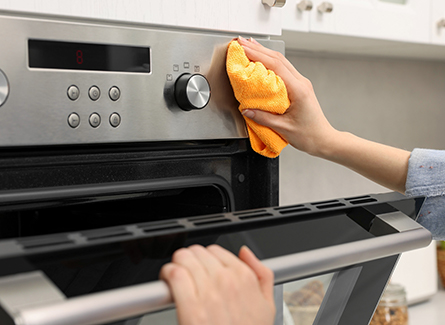
Faucet handles and stove knobs are consistently touched by dirty hands. Use disinfecting wipes daily on faucet handles and wash stove knobs weekly in hot, soapy water. Let them dry thoroughly before returning to the stove.
Counter tops see almost as much action as the kitchen sink. Wipe them down with hot, soapy water and rinse them with clean water after each meal.
A cutting board is one of the most versatile tools in any kitchen, able to accommodate many types of food. Because of this, it’s important to run it through the dishwasher or hand wash in hot, soapy water, rinse and submerge in a bleach solution after every use.
While more germs congregate in the kitchen than anywhere else in the house, they can be found elsewhere. Run your toothbrush holder through the dishwasher or hand-wash in warm, soapy water once or twice a week. Keep disinfecting wipes handy for these items:
- Remote controls
- Light switches
- Handles
- Doorknobs
- Phones
- Video game controllers
- Home office items, including the mouse, keyboard and desktop
The best way to keep any area germ-free is to wipe it down with a household cleaner that contains soap or detergent after use. This will remove most harmful viruses and bacteria.
It’s also important to wash your hands before, during and after any food prep, especially after handling raw meat, poultry, seafood or eggs. Unwashed hands can spread germs to other foods and around your home. One of the most effective ways to stop spreading germs is also the easiest: wet your hands, lather thoroughly with soap, scrub for 20 seconds, rinse and dry completely.
While this list can seem overwhelming, small, consistent steps can make a substantial difference. It just takes awareness of where germs tend to gather and a routine that keeps those hidden hotspots in check.