Key takeaways
- Sports nutrition helps fuel everyday activity, exercise and recovery, not just competitive athletics.
- Carbohydrates, protein and hydration all play important roles before, during and after physical activity.
- Nutrition needs vary based on activity level, but balanced meals and proper hydration support overall performance and health.
The term sports nutrition can conjure images of cans of supplements, strict diets and regimented training plans. But really, sports nutrition is essential for anyone who leads an active lifestyle or exercises regularly. It’s also less intimidating than it seems.
Sports nutrition is simply making sure your body has the proper fuel for both everyday movement and physical activity.
What is carb loading?
One of the most misunderstood aspects of sports nutrition is carb loading. Many imagine this as eating lots of pasta before a big race, but the key is to intentionally increase your carbohydrate intake in the days leading up to endurance events that last longer than 90 minutes. The types of carbs matter, too. You want quick-digesting foods that provide fast energy without sitting heavily in the stomach. Good pre-event carbs include:
- Bagels
- Toast
- Cereal
- Oatmeal
- Bananas
What recovery foods help your body heal?
What you eat after exercising matters just as much. For recovery, your body needs protein and carbohydrates. Protein helps repair muscles, while carbohydrates replenish glycogen stores depleted during activity. Good recovery nutrition includes:
- Chocolate milk
- Peanut butter sandwiches
- Yogurt with fruit
- Oatmeal
- Eggs and toast
Why does hydration matter?
It’s also important to take care of yourself while exercising. Hydration helps regulate body temperature, lubricate joints and transport oxygen to the muscles. It becomes particularly important in hot weather.
Sweat is how your body prevents overheating, but it also causes the body to lose fluids and electrolytes, especially sodium. While water works for most situations, if you’re sweating heavily or doing intense exercise, you may want to consider a sportsdrink designed to replace electrolytes.
Stay ahead of dehydration. If you’re thirsty, you’re already partially dehydrated. Drink frequently during exercise and listen to your body. It will send signals when its nutrition or hydration needs aren’t met. This can include:
- Muscle cramps
- Headaches
- Fatigue
- Dizziness
- Declining performance
Pay attention to these signals.
How do you match nutrition to your activity level?
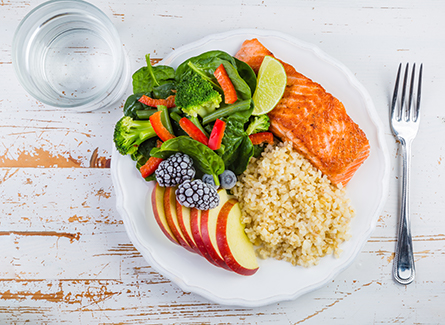
Just as general nutrition differs from person to person, sports nutrition does too. Someone who trains daily needs to eat differently than someone who walks a few times each week. Your activity level also changes what a healthy plate looks like. For less active people, vegetables should make up about half the plate. For athletes or highly active people, carbohydrates may need to take up a larger portion to provide enough energy.
For most people, though, the basics remain the same: eat balanced meals, stay hydrated and make sure the body has enough fuel to stay active.