Rainbow Baby program brings hope and healing
April 7, 2026By: Kim Shopper
Categories: Maternity, We are NKC Health
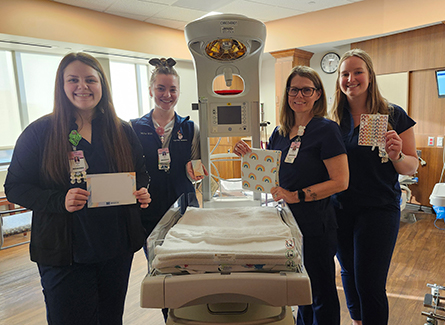
For many families, the birth of a child is one of life’s happiest moments. But for parents who have experienced miscarriage, stillbirth or infant loss, pregnancy after loss can be filled with complex emotions — hope, fear, grief and joy all at once.
To support those families, nurses in Maternal Child Health created the Rainbow Baby program, a compassionate initiative designed to recognize and celebrate babies born after a loss. Since the program started in June 2025, 68 families have participated in this unique initiative.
What is a rainbow baby?
A rainbow baby is a baby born after a miscarriage, stillbirth or infant loss. Much like a rainbow that appears after a storm, the term symbolizes hope and healing following a difficult time.
The Rainbow Baby program focuses on honoring that journey and acknowledging the emotions families may carry with them into the delivery room.
“Labor and delivery is often thought of as all happy moments, cuddling babies and celebrating,” said Taylor Cullen, BSN, RN, C-EFM. “But there are also families who have experienced profound grief. Being able to walk with them through that and then celebrate when they finally have their rainbow baby is incredibly special.”
A program born from compassion
The idea for the program began with a former nurse who had personally experienced pregnancy loss and suggested creating something meaningful for parents delivering a rainbow baby.
Members of the Maternal Child Health bereavement team, including Kathee Long, MSN, RNC-OB, as well as Taylor and nurses Dayle Davis, BSN, RN, Lydia Richter, BSN, RN, and others, spent more than a year developing the concept.
The team carefully researched how families view rainbow babies and how to approach the topic sensitively, recognizing that every parent’s experience is different.
“Some mothers see it as a celebration, some feel anxious, and others may not want the recognition at all,” Kathee said. “That’s why participation is completely optional. We always ask patients if they would like to be part of the program.”
How the program works
When a patient chooses to participate, nurses place a small rainbow magnet on the doorframe of the patient’s room and a rainbow symbol on the medical chart. These subtle signals help staff recognize the family’s experience and approach conversations with greater awareness and sensitivity.
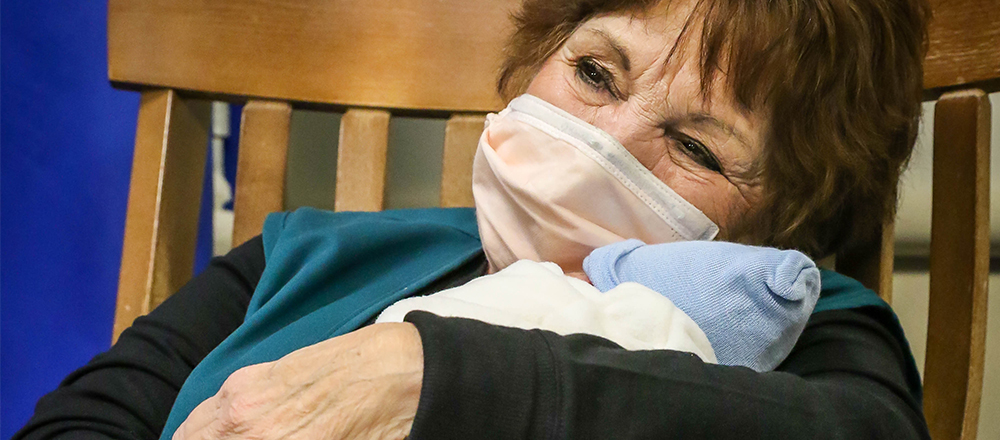
Families also receive keepsakes, all adorned with rainbows, to commemorate the birth of their rainbow baby, including a footprint certificate and flannel baby blanket.
The blankets are provided through donations, including those made by The Linus Project, a volunteer organization that creates handmade blankets for patients.
“These small touches can mean so much,” said Dayle. “Parents are often surprised when we ask if they’d like to participate. When they see their baby wrapped in that rainbow blanket, it can be a really emotional and joyful moment.”
A personal perspective
For Britteny Mark, BSN, RN, a staff nurse on the Mother/Baby unit who joined NKC Health in 2019, the Rainbow Baby program became deeply personal.
Britteny experienced the loss of her first pregnancy in January 2025. She was 27 weeks along with a baby boy when she noticed decreased movement.
“Everything had been going great,” Britteny said. “But I told my husband, Taylor, that something just didn’t feel right.”
Despite testing and care, the cause of the loss was never determined.
Six months later, Britteny became pregnant again. While hopeful, the experience came with understandable anxiety.
“I felt a lot better once I got past 27 weeks,” she said. “What happened the first time was rare, and it would have been even rarer for it to happen twice, but it was still something that stayed in the back of my mind.”
Britteny worked up until just a few days before being induced. At 12:39 a.m. on March 7, she and her husband welcomed their daughter, Ellie Ray. Ray was the name they had chosen for their son.
“I was happy to hear about the program,” Britteny said. “I wanted to acknowledge my first baby and that Ellie is my rainbow baby.”
Recognition that matters
During Britteny’s stay in the hospital, the rainbow magnet outside her door signaled to colleagues, friends and family that Ellie was a rainbow baby.
“My family and coworkers saw the magnet on the door and knew I had a rainbow baby,” she said. “They were able to celebrate the joy we felt.”
For Britteny, the program offered something simple but powerful — acknowledgment.
“I understand that everyone is different and some parents may not want to talk about it,” she said. “But I’m open about my experience. I would rather talk about it than feel like people have to walk on eggshells. It’s nice to have that acknowledgment.”
Supporting families through every stage
The Rainbow Baby program complements the hospital’s broader bereavement support services. For families who experience pregnancy or infant loss, the team offers memory-making opportunities such as handprints, footprints, keepsake jewelry, photos and other mementos to help honor their baby.
Because nurses may care for the same families through both loss and subsequent pregnancies, the program can be especially meaningful for staff as well.
“We sometimes meet families in their darkest moments,” Taylor said. “Then later we get to see them come back and have their rainbow baby. Being part of that full journey is incredibly powerful.”
Creating space for healing and hope
For many parents, simply acknowledging their loss can make a difference. Some families bring photos, ultrasound images or other mementos of the baby they lost. Others simply appreciate the extra recognition of how meaningful the birth of their new child is.
“The goal isn’t to treat anyone differently,” Dayle said. “It’s to celebrate that much more for families who have been through something so difficult.”
As the program continues to grow, the team plans to gather feedback from patients and staff to expand its impact. They also welcome volunteers willing to donate handmade items such as blankets or other comforting keepsakes.
Above all, the program reflects the team’s commitment to caring for families through both grief and joy.
“There’s always hope after the storm,” Taylor said. “For these families, that hope is their rainbow baby.”